-
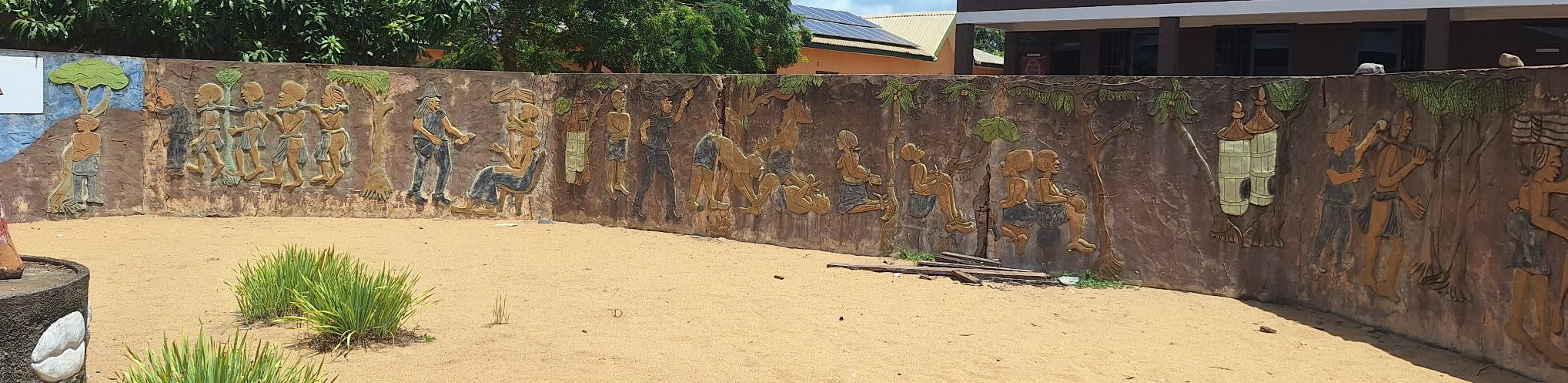
Voices from Keta


Keta Senior High Technical School (KETASCO) is one of the best-known secondary schools in the Volta Region of Ghana. Founded in 1953 with just a handful of pupils, the school now has more than 2,800 young students.
The school’s motto, ‘Dzo Lali’ – ‘Fly Now’ – stands for education, discipline and the hope for a better future.
As part of the project, pupils explored the history of slavery, the culture of remembrance and issues of global justice.
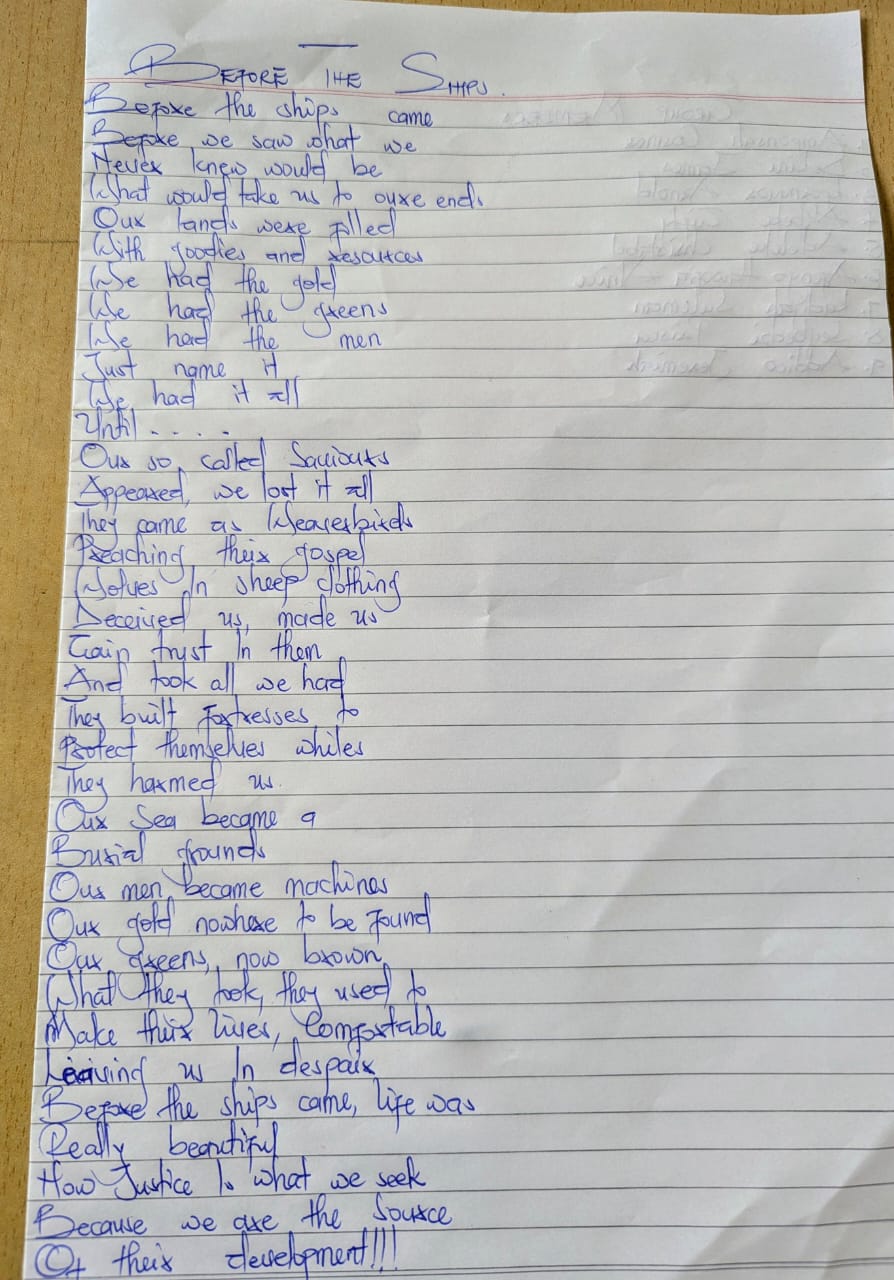
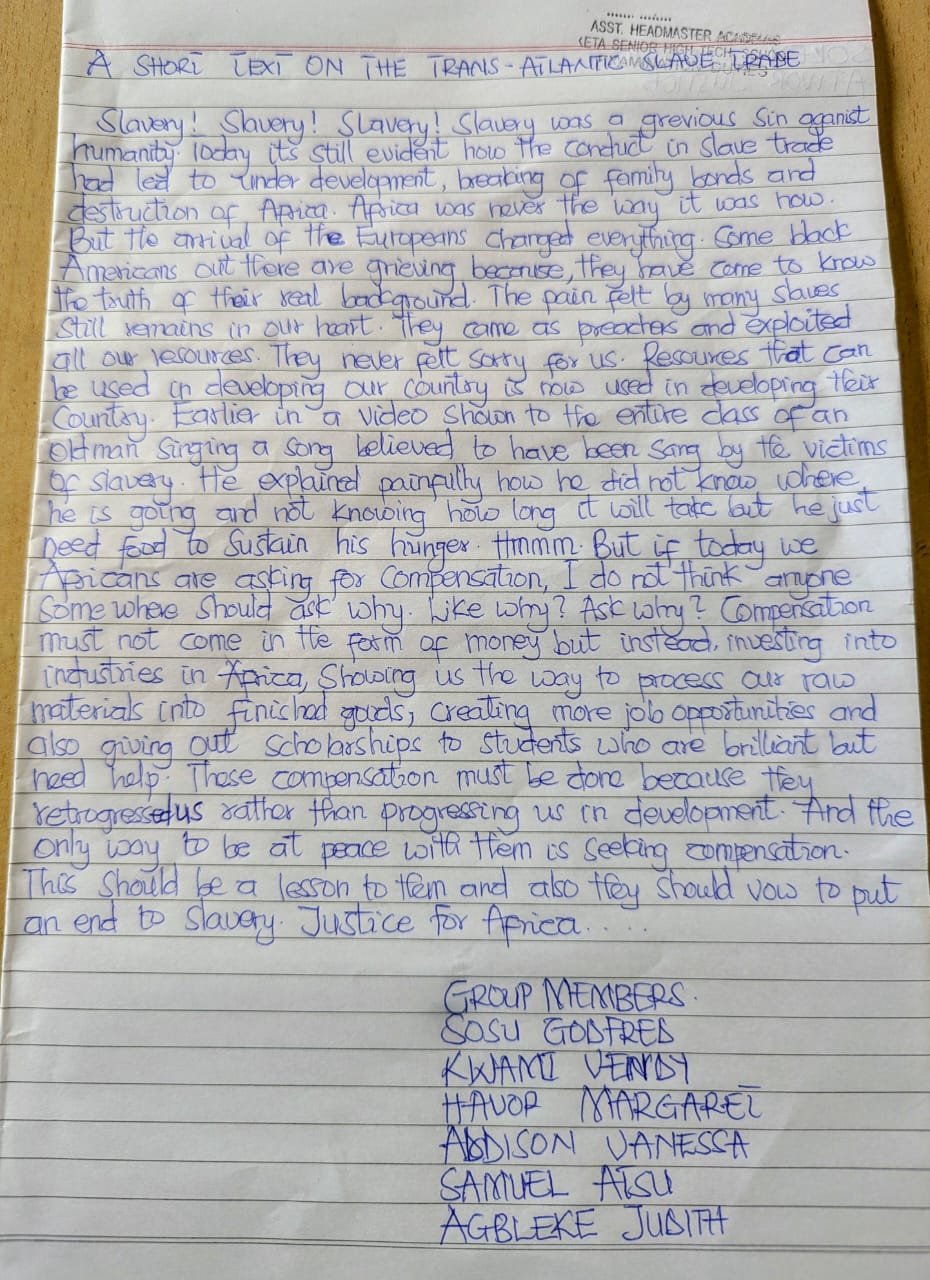
Following an introduction to the history of transatlantic slavery, the pupils discussed its consequences to this day. This led to the creation of poems, essays and creative works on remembrance, injustice and visions for the future.
A key starting point was a visit to Fort Prinzenstein in Keta – a historic site on the Ghanaian coast associated with the deportation of enslaved people.
The project was supervised by teachers Abrawa Daniel and Gomashie Innocent, as well as Joel Degue and Katharina Hoffmann. Together with the pupils, they discussed history, responsibility and the significance of local sites of remembrance.
Of particular importance was the link between learning at school and the experiences of the local community.
Videos of the pupils’ presentation of their findings can be found here.
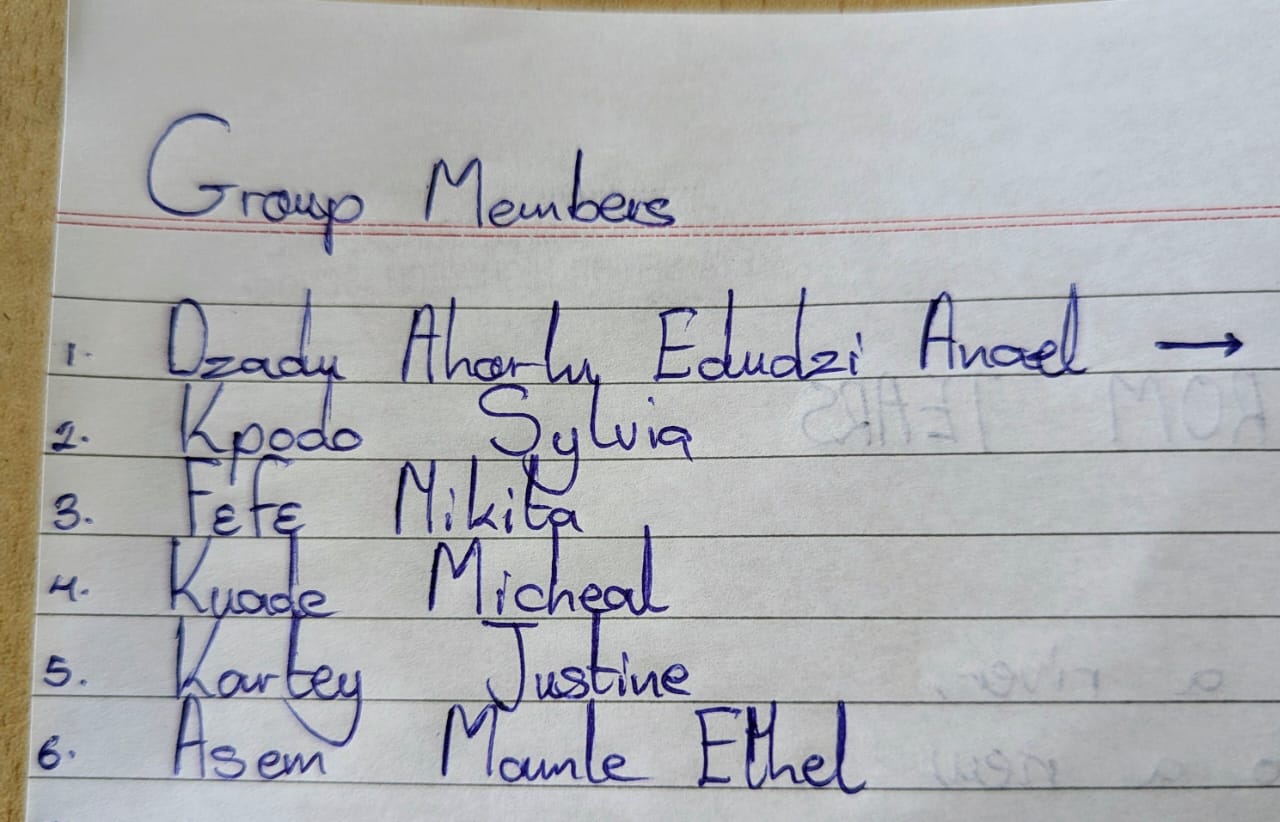
These are the texts the pupils have created:
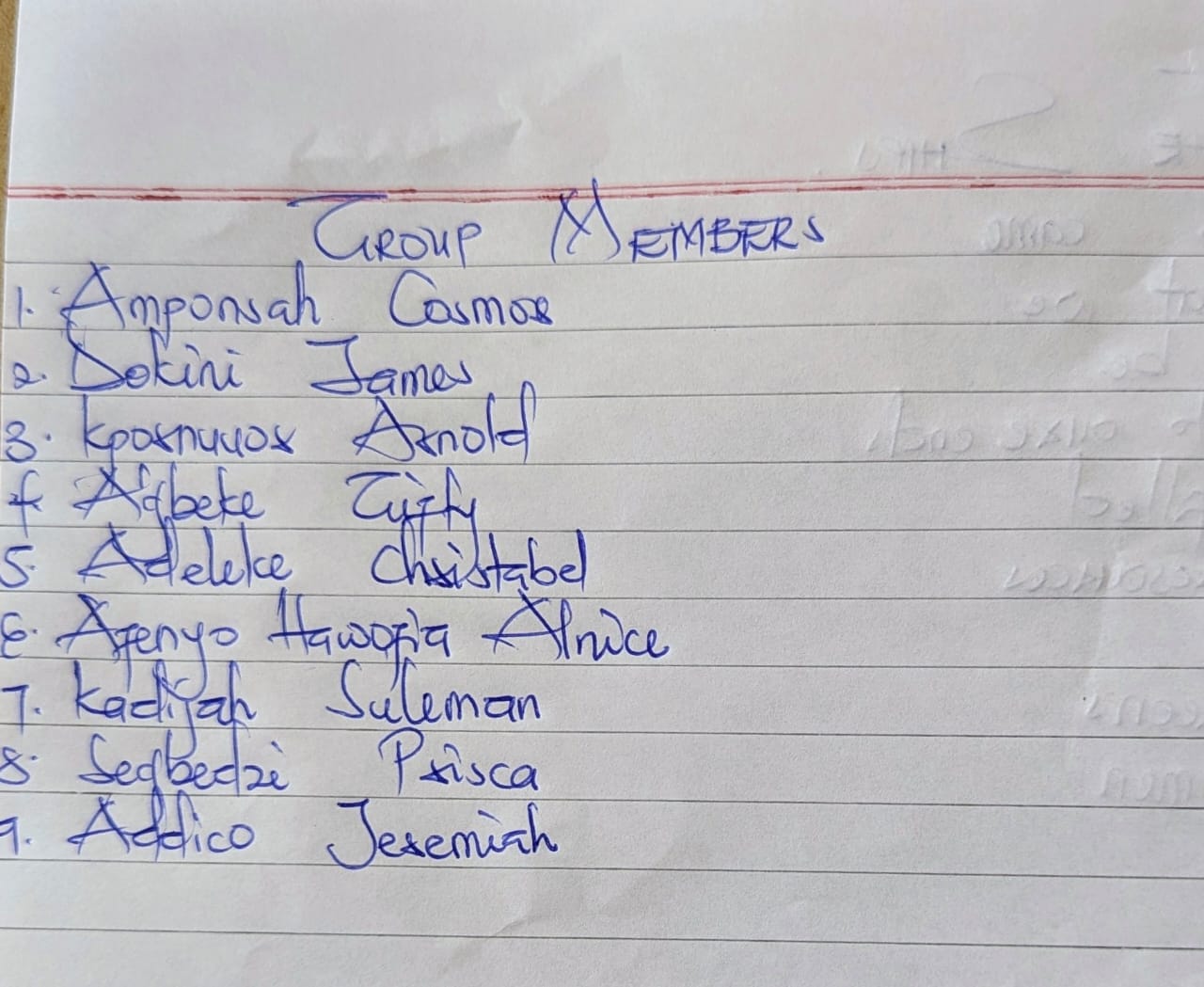
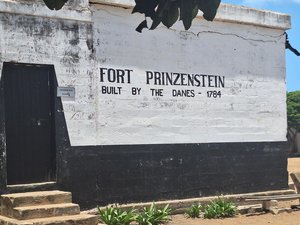
Following their visit to Fort Prinzenstein, Katharina Hoffmann and Joel Degue spoke to the local chief, Togbi James Ocoloo V, about the significance of this historic site and current initiatives relating to the culture of remembrance in Keta. Large sections of the former fort have been destroyed by coastal erosion. The Ghana Museums and Monuments Board (GMMB) is working alongside the local community on an independent revitalisation project.
You can watch the conversation with the Chief here.
Joel Degue, along with journalists Saviour Selasi Amenyedzi and Frederick Nuviadenu, also share their views on the history of slavery, the culture of remembrance and issues of historical justice.
You can watch these interviews here.
In addition, other local memorial sites have been established in the region, such as the Hedzranawo Slavery Museum and the Hedzranawo-Adzido Slave Market Memorial Centre, which opened in 2023. Both institutions are part of the independent ‘Coastal Volta Enslaved Route Project’ and demonstrate how local communities are shaping historical reconciliation and educational work themselves.
You can find impressions and photos from both institutions here.
The coastal village of Atorkor was once a centre of the transatlantic slave trade. Even today, a memorial and local stories serve as a reminder of this history.
Particularly striking is a traditional song about the abduction of drummers and traders in 1856. The story is still passed down orally to this day and encompasses remembrance, grief and resistance.
A central part of Atorkor’s culture of remembrance is the song about Afuadiama – a young woman who, along with others, was lured onto a slave ship and taken away. You can watch and listen to the song here. It is sung by Sylvanus Kofi Afetorgbor.
The song recounts loss, violence and the hope of returning home. To this day, it is sung in the Ewe language and passed down from generation to generation.
The words of the song go like this (translated by Degue, Paemka and Niboe-Wuasi):

SODIS / Ghana
Unser neues Projektheft 2027 können Sie hier online durchblättern oder als pdf herunterladen.
Die Norddeutsche Mission stellt einen Spendenflyer für Aufforstungsprojekte in Ghana und Togo vor.
weiterlesen...
Die Norddeutsche Mission hat eine Frauenkonferenz durchgeführt, die das Thema „Sexualisierte Gewalt gegen Frauen" hatte.

Die Norddeutsche Mission verpflichtet sich ....

